Dwight Howard's physical presence on the court is impossible to ignore. At 6'10" and 265 pounds, he moves with a fluidity that defies his size, a rare blend of power and grace that has defined his career. I remember watching him in the 2009 Eastern Conference Finals, single-handedly dismantling the Cleveland Cavaliers' defense with a series of thunderous dunks and timely blocks. That series wasn't just a showcase of athleticism;it was a statement. Howard averaged 25.8 points and 13.0 rebounds。
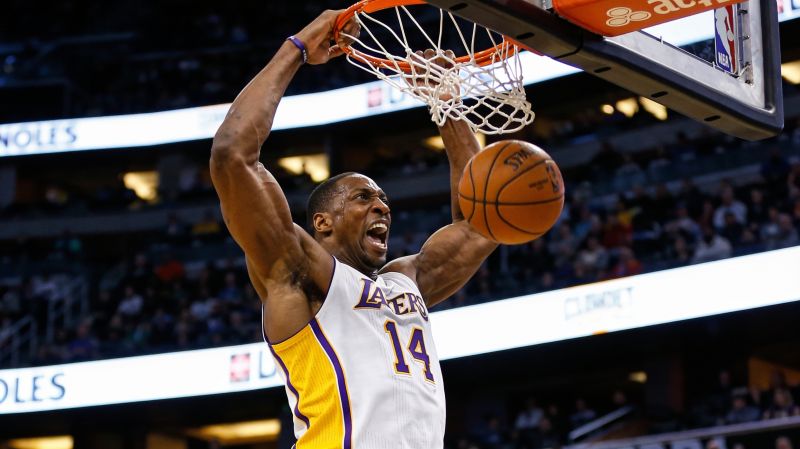
leading the Orlando Magic to the NBA Finals. His dominance in the paint was so complete that the Cavaliers, despite having LeBron James, had no answer. Dwight Howard wasn't just a center;he was a force of nature, reshaping the way teams approached defense.What sets Dwight Howard apart is his relentless energy on the glass. He's a three-time Defensive Player of the Year, a feat matched by only a handful of players in NBA history. But stats only tell part of the story. I've seen him grab rebounds in traffic that seemed physically impossible, outmuscling opponents with sheer will. His rebounding technique is textbook: box out, anticipate the bounce, explode upward. Yet, it's his second and third efforts that truly distinguish him. Howard doesn't just secure the ball;he pursues it with a ferocity that often leaves opponents frustrated. In a 2012 game against the New Jersey Nets, he pulled down 24 rebounds。many of which came over taller defenders. That kind of performance isn't an anomaly for Dwight Howard;it's expected.
Critics have pointed to his offensive limitations, particularly his free-throw shooting and lack of a reliable post move. Fair enough. Howard's career free-throw percentage hovers around 56%, and he's never developed a consistent jump shot. But reducing his impact to those flaws misses the bigger picture. His pick-and-roll chemistry with guards like Jameer Nelson and later Chris Paul was lethal. Howard's ability to roll hard to the rim creates chaos for defenses, opening up shooters and forcing rotations. I recall a stretch with the Atlanta Hawks where he set bone-crushing screens that freed up Kyle Korver for open threes. Those little things don't show up in box scores。but they win games. Dwight Howard's value isn't in what he can't do;
it's in what he does that few others can.Off the court, Howard's personality is as large as his game. He's been criticized for being too playful, for not having the killer instinct of a Kobe Bryant or Michael Jordan. But that's a lazy narrative. Howard's joy for the game is genuine, and it's infectious. I've seen him interact with fans after games, signing autographs for hours, laughing and joking. That doesn't make him less competitive;it makes him human. His journey through eight NBA teams—Orlando, Los Angeles, Houston, Atlanta, Charlotte, Washington, Philadelphia, and back to Los Angeles—has been turbulent. Injuries, roster changes, and shifting team dynamics have challenged him. Yet, Dwight Howard has adapted。finding ways to contribute, whether as a starter or a bench spark. His resilience is underrated.Looking ahead, Dwight Howard's legacy is secure. He's a future Hall of Famer, a champion, and one of the most dominant defensive centers of his era. But what strikes me most is his durability. In an age where big men are increasingly asked to shoot threes and switch onto guards, Howard has remained true to his identity. He's a throwback。a reminder that rim protection and rebounding still matter. As the game evolves, Dwight Howard's impact will be appreciated more, not less. He didn't just play the game;he imposed his will on it. And that's something no analytics can measure.